
WHAT DEFINES A GOOD ATHLETE?
I learned my first lesson about being a good athlete when I was about four years old.
Not from a scoreboard.
Not from a box score.
Not from a coach yelling from the sideline.
I learned it wandering through an empty basketball arena, looking for dollar bills hidden under seats.
I didn’t know it then, but that moment would end up shaping my entire career—long after basketball stopped loving me back.
⸻
The First Lesson
I grew up around the game. Hell, I was born into it.
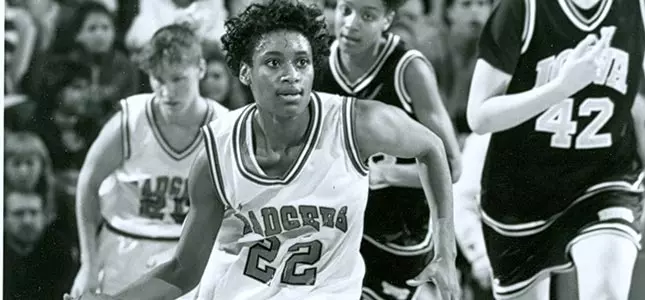
Basketball wasn’t a hobby in my family; it was infrastructure. My mother, Mynette a former Wisconsin Badger turned graduate assistant coach, spent long nights in gyms and offices building programs and pouring into athletes. I spent those nights nearby—too young to understand X’s and O’s, but old enough to feel the energy of the space.
While my mom worked, I sat courtside — for both the men’s and women’s practices. The sounds. The lights. The sense that this place mattered.
And a few of the players noticed.
They didn’t have to. I was just a kid killing time in a building full of adults chasing something bigger. But instead of ignoring me, they brought me into their world in the simplest way possible.
Players like Michael Finley and Tracy Webster hid one-dollar bills around the UW–Wisconsin arena—under seats, around railings, folded into programs. My job was to find them.
At four years old, it felt like magic. What I didn’t realize was that I wasn’t just being entertained—I was being seen.
I was learning the quiet power of inclusion.
I was learning what giving back actually looks like.
⸻
When the Game Stops Loving You
Like a lot of kids raised around sports, I believed the game would always be there for me. Basketball was my identity. The thing I thought would eventually return all the love I poured into it.
But that’s not how it works for most of us.
At some point, sports stopped choosing me.
Not because I stopped loving it.
Not because I stopped working.
But because the phone stopped ringing.
I wasn’t highly recruited. I felt like I had Division II-level game, but I was a skinny kid. The rejection didn’t come with closure—it came quietly. Watching peers’ names get called. Watching opportunities pass.
That’s when a lot of athletes get lost. Because if you’re not careful, you start to believe your identity ended when your playing career did.
For a while, I believed that too.
What I eventually realized was that the game had already given me my identity—I just didn’t recognize it yet.
⸻
The Weight the Game Carried
Before basketball ever broke my heart, it taught me how heavy life could get.
I had to go the JUCO route, and I’ll never forget where I was when I got the call that one of my teammates, Jermaine Malone, had been shot and killed in Rockford, Illinois. New Year’s Day, 2008. Shot in the head.
There’s no way to soften that sentence.
Jermaine wasn’t a headline to us. He was family. A teammate. A father. Someone who shared locker rooms, jokes, bus rides, and dreams. Someone who believed the game could take him somewhere safer.
Losing him changed everything. Changed how I viewed life. Sports. And humanity.
Basketball wasn’t just a game anymore—it was a refuge. A fragile shield against realities that didn’t care how talented or hopeful you were.
It also taught me something brutal and lasting: the game can’t save everyone.
That truth forced a question into my life early:
If the game can’t protect us, what responsibility do we have to protect each other?
⸻
Lessons That Lasted Longer Than the Game
The best coaches I ever had understood that basketball was never just about basketball.
My AAU coach—my aunt—Areneda “NeNe” Yarbrough, who’s been to a Final Four, once let me have it for passing up shots as a junior in high school. I started slow. Didn’t feel like my night. So I thought, let me get someone else going.
She called a timeout and didn’t waste a second.
“Do you know who your mama is? She would never pass up an open look. You shoot till you get hot. And when you get hot, you keep shooting.”
On the surface, it sounded like a scorer’s mentality.
But that lesson followed me far beyond the court — and I’m not even sure she knows that.
It taught me persistence when nothing’s falling.
It taught me to recognize momentum when it shows up.
And it taught me not to shrink when things finally start going right.
When you’re in a position to make an impact—you don’t hesitate.
You keep shooting.
⸻
What the Game Actually Gave Me
Sports didn’t give me a long playing career.
They didn’t give me fame or wealth.
They didn’t give me a fairytale ending.
What they gave me was something more durable.
They gave me community. Most of my closest friendships were built through sports.
They gave me responsibility.
They taught me that influence—no matter how small—is never neutral.
Those dollar bills hidden in that arena weren’t about money. They were about intention. About someone with a platform choosing to make a kid feel like he belonged.
So when I later found myself drawn to philanthropy and community work, it didn’t feel like a pivot.
It felt like a continuation. Like my true identity.
⸻
Why I Chose Philanthropy
Coming out of college, I was certain I wanted to work in sports. I attended every career fair I could, from New York to Indianapolis back up to Detroit. I didn’t know exactly what I wanted to do—but I knew why.
In 2012, I landed a group sales role with my home state Milwaukee Bucks. The 2012–13 “Bucks in 6” season. I was home, in the league, learning the business.
If you know Milwaukee sports, you know Skip Robinson. At the time, he oversaw community engagement for the Bucks. I was supposed to be selling tickets—but I couldn’t stay away from his assistant. I wanted to understand donations, requests, and why free tickets were being given to schools and youth centers.
I was fired after one season for low ticket sales.
But one moment changed everything.
That season, Caron Butler—also from Racine—was playing for the ‘Lob City’ Clippers. He launched a youth basketball program at home, in partnership with the YMCA and wanted to purchase 200+ seats for every kid, coach, and family member.
We made it happen.
Those kids came to the pregame shootaround. They met DeAndre Jordan and Blake Griffin. They saw Chris Paul live.
Just like that, I helped create my first community engagement event with a professional athlete.
The jersey came off.
The impact stayed.
⸻
Redefining “Good Athlete”
Somewhere along the way, we narrowed the definition of a good athlete.
We tied it to production.
To winning.
To stats.
But the first good athletes I ever knew weren’t defined by numbers. They were defined by how they treated a four-year-old kid sitting courtside.
They understood something I’m still building my life around:
Sports are a platform—not a destination.
Excellence on the court means little if it doesn’t translate off it.
Legacy is measured by who you lift, not what you score.
⸻
Why I’m Building Good Athletes
I’m building Good Athletes because sports didn’t abandon me—it prepared me.
This platform exists to tell the stories that rarely make highlight reels. The stories of athletes who understand that being good isn’t just about how you play—but how you show up.
For your community.
For the next generation.
For the people watching who may never get a chance to play.
I was one of those kids.
I remember how it felt to be included.
To be noticed.
To be inspired.
And I believe when athletes understand the weight of that feeling, they become more than competitors.
They become teachers.
They become leaders.
They become good athletes.
That lesson didn’t come from a trophy.
It came from a few hidden dollar bills, a coach who told me to keep shooting, a teammate whose life was taken too soon, and a game that taught me—long before it ever let me go—what I was meant to do next.
Purpose plays here.